Product Page Design

When someone visits your online store, your product page often decides whether they buy or bounce. It's where decisions are made, doubts are clarified, and value is communicated. A good product page doesn’t just display information; it tells a story, builds trust, and guides people toward purchase with clarity and confidence. Yet, many ecommerce brands overlook small design choices that lead to big losses. From layout and imagery to variant selectors and mobile responsiveness, every detail matters.

Check out our Blog

Do You Really Need A CRO Agency? The Honest Truth

Do You Really Need A CRO Agency? The Honest Truth

Learn the difference between a CRO audit and a CRO agency, including costs, testing capabilities, and which option best fits...
CRO Agency vs CRO Audit Service: Which Is Right for Your Business?

CRO Agency vs CRO Audit Service: Which Is Right for Your Business?

Businesses face a critical choice between continuous CRO support and a one-time diagnostic report. A CRO Audit is a fixed-fee,...
How To Optimize Product Pages For Conversions In 2026

How To Optimize Product Pages For Conversions In 2026

Learn how to optimize product pages for higher conversions with better CTAs, trust signals, product info, UX, and mobile-friendly design.

Why Product Page Design Matters More Than Ever

Your product page is often the final stop before a customer clicks “add to cart.” If it doesn’t answer their questions quickly and clearly, they’ll leave, no matter how great the product is. Strong product page design isn’t just about looks. It’s about guiding users through a smooth, confident decision-making process. Every element, from images and copy to reviews and CTAs,  needs to work together to remove friction and build trust.

Even the most successful ecommerce brands lose sales from small, fixable mistakes. Confusing layouts, poorly placed details, and lack of clarity all lead to drop-offs. That’s where effective product page UX design makes a real difference. When every part of the page has a clear purpose, visitors feel supported, and that leads to better engagement and higher conversions. It’s no longer just about what you say, it’s how and where you say it.

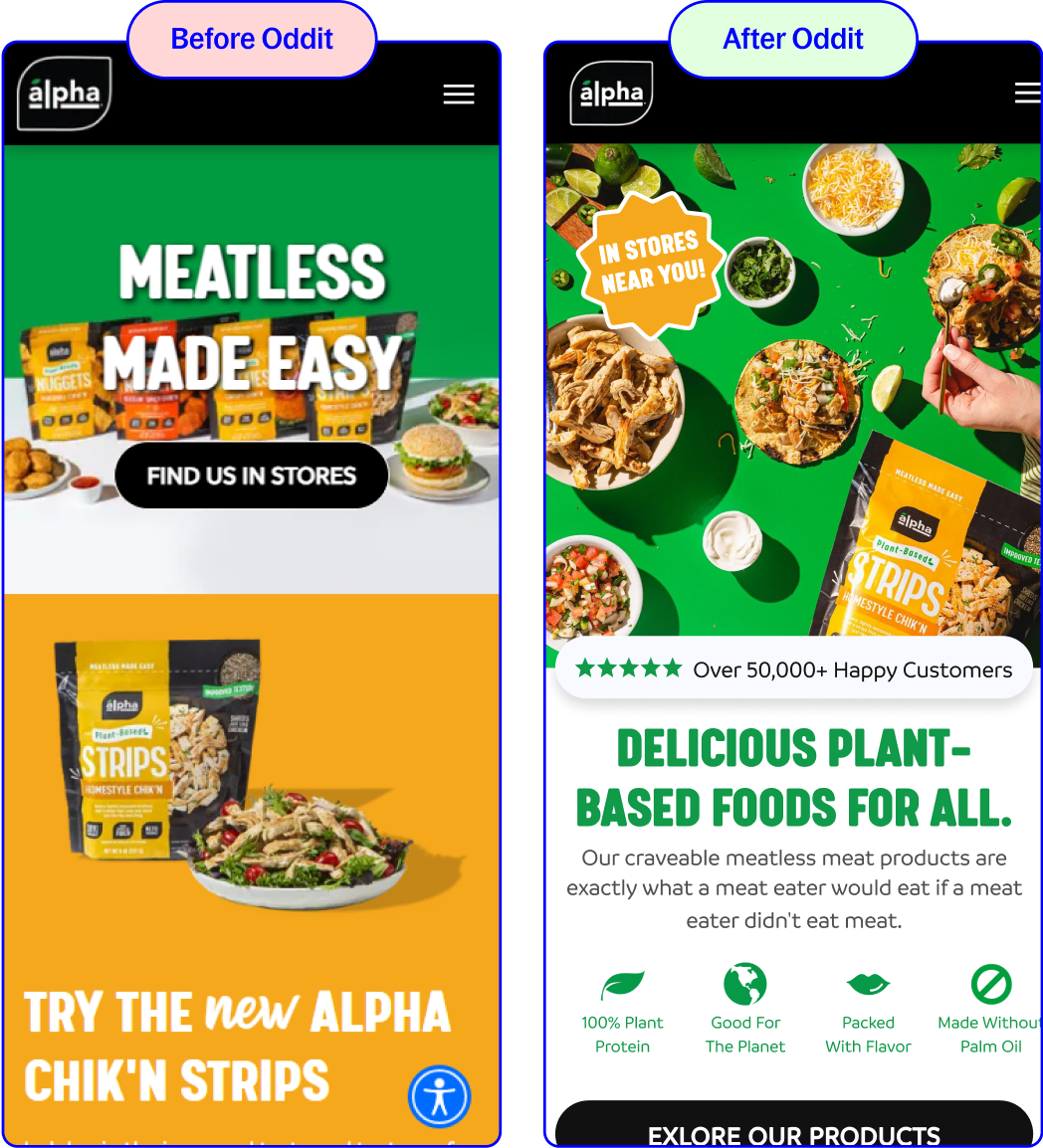
At Oddit, we specialize in spotting these missed opportunities. As shown in our Product Page Guide, thoughtful UX improvements to ecommerce pages can make a measurable difference. We go beyond advice to show brands exactly what to fix through redesigned sections built for impact. Because in the end, better design means better performance.

How Oddit Reimagines Product Page UX Design

Design isn’t just about aesthetics, it’s about performance. At Oddit, we take a conversion-first approach to product pages, focusing on how users actually interact with the content. Here's how we rework product page UX design to help ecommerce brands drive real results:

Clear Visual Hierarchy That Guides The Eye

When a product page is cluttered or unbalanced, users get overwhelmed and disengage. Oddit redesigns sections to establish a strong visual hierarchy, where the most important details, like product title, price, and CTA, are easy to find at a glance. By guiding the eye with clean spacing, bold headlines, and smart layout choices, we help customers move naturally toward checkout.

Reducing Friction Through Functional Simplicity

Too many ecommerce pages ask users to think too hard. Oddit removes the guesswork by simplifying key interactions, from selecting a variant to understanding shipping details. These friction-reducing updates are a core part of our approach to product page UX design, making every click feel easy and intentional.

Rewriting Content For Clarity And Conversion

Design alone doesn’t convert; the words matter too. Oddit refines product descriptions, highlights unique value propositions, and adjusts messaging tone to fit the brand and the buyer. The result is content that’s not just readable, but persuasive, helping brands communicate clearly and convert more effectively.

The Science Behind Ecommerce Product Page Design That Converts

A high-converting product page isn’t built on guesses. It’s built on user behavior, data-backed design, and a deep understanding of what drives action. Here’s how Oddit approaches ecommerce product page design with strategy, not assumptions:

Data-Informed Layout Decisions

Every scroll, click, and bounce tells a story. Oddit uses real user behavior to decide where each element belongs, from product images to social proof. By studying how people engage with your page, we design layouts that align with user expectations and reduce drop-off.

Above-the-Fold Impact Zones

The first few seconds on a page are critical. We focus on making the above-the-fold area work harder by placing the most persuasive content, like value props, trust markers, and clear CTAs,  exactly where users look first. This fast-tracks the path to engagement without forcing users to dig for answers.

Design That Supports Decision-Making

Every detail on a product page should help users feel more confident. Whether it's reinforcing benefits, showcasing reviews, or clarifying shipping and returns, Oddit ensures the design supports informed decisions. As highlighted in our 6 PDP tips that get clicks, even subtle shifts in structure can lead to major conversion lifts.

Designing A Smarter Product Detail Page: The Oddit Way

The best product pages do more than inform; they remove doubt and guide decisions. Oddit takes a focused approach to redesigning every part of a product detail page design to make it cleaner, more intuitive, and built to convert. Here’s how we help brands build smarter PDPs:

Clarity-First Structure

Confusion kills conversions. We restructure product detail pages to present information in a logical, digestible flow, starting with what matters most. This includes pricing, value props, and purchasing options presented in a way that eliminates hesitation and keeps users engaged.

Mobile-Optimized Design Thinking

Most ecommerce traffic is mobile, but many product pages still treat mobile as an afterthought. Oddit prioritizes mobile usability by ensuring buttons are easy to tap, images load quickly, and content flows in a scannable, vertical format. The result is a mobile experience that performs just as well, if not better, than a desktop.

Improving Micro-Interactions That Matter

Small interactions shape the entire buying experience. Whether it’s how a size chart opens, how variants are selected, or how reviews expand, we design micro-interactions to feel smooth and intuitive. Our breakdown on the importance of variant selectors on PDP's shows how these overlooked moments can be the difference between a bounce and a buy.

PDP Optimization Strategies That Actually Work

Optimizing a PDP isn’t about adding more; it’s about refining what’s already there. At Oddit, we focus on what truly drives results and cut what doesn’t. Here are a few ways we approach PDP optimization to help ecommerce brands increase conversions:

Strategic Placement Of Trust Signals

Trust plays a major role in purchase decisions. We position key elements like reviews, guarantees, and social proof in the right places to reinforce credibility without overwhelming the design. When done right, trust-building content works in the background to support the user’s journey.

Call-to-Action Areas That Drive Action

The Add to Cart section is one of the most important parts of a PDP. Oddit ensures this area is visually distinct, easy to use, and free from distractions. We test and refine CTA layouts that encourage clicks and reduce abandonment.

Visual Consistency That Builds Confidence

Disjointed design breaks trust. That’s why we focus on keeping colors, fonts, and styles consistent across every section of the product page. As shown in our Product Page Transformation, improving visual flow helps users feel more confident, stay longer, and buy more.

Product Page UX Best Practices: Insights From Oddit’s Experts

Not all UX advice works for ecommerce, and not all ecommerce UX fits your brand. At Oddit, we focus on product page UX best practices that are proven to reduce friction and support buying decisions. Here’s what we’ve learned from working with hundreds of DTC brands:

Simplify The Decision-Making Process

When users land on a product page, they’re looking for clarity. We streamline content, remove distractions, and surface the information that matters most. This helps shoppers feel confident and keeps them moving forward.

Focus On Scannability

Users don’t read, they scan. That’s why we design pages with short blocks of text, strong headlines, and well-placed icons. As detailed in Crafting the perfect PDP, visual cues and clear formatting lead to better engagement and easier navigation.

Consistency Across Pages

A user should never feel like they’ve landed on a different site when they view a new product. Oddit ensures consistent branding, layout patterns, and behavior across all PDPs. This builds trust and keeps the shopping experience seamless from start to finish.

Transform Your Product Pages With Oddit’s Proven Methods

Most ecommerce brands don’t need more features on their product pages; they need a sharper, more strategic design approach. At Oddit, we take what’s already there and elevate it. From layout to messaging, we help brands uncover the design gaps that are holding them back and replace them with high-performing, user-focused solutions.

Whether you're trying to reduce bounce rates, improve mobile usability, or just make your product pages easier to shop, our team delivers clear, actionable upgrades that are ready to implement. We don’t just tell you what to fix, we show you how it should look, and why it works.

Curious to see what your product page could look like with expert input? Explore the kind of results we've delivered in our Product Page Guide, or dive into our design process by visiting Oddit.

Frequently Asked Questions

Product page design refers to the layout, structure, and content arrangement on a product detail page, with the goal of helping users make buying decisions efficiently. It includes visuals, text, and functional elements like variant selectors, CTAs, and trust markers.

Over 60% of ecommerce traffic comes from mobile devices. A mobile-first product page design ensures that all content and interactions are easy to access, scroll, and tap — reducing drop-off and improving conversions on smaller screens.

A well-structured product page design with optimized images, headings, and content improves page load speed and usability — both important for SEO. Search engines also favor product pages that clearly present information and reduce bounce rates.

Key elements that should appear above the fold include the product name, price, main image, CTA (e.g. Add to Cart), and a short value proposition. These help users engage quickly without having to scroll.

Embedding videos in your product page design can increase time on page and boost conversion rates by providing context, showing product use, and building trust through dynamic content.

Brands should review and update product page design every 6–12 months, or whenever they notice a dip in performance metrics like add-to-cart rate, bounce rate, or sales. Frequent A/B testing helps guide effective updates.