


Trusted by 10,000+ brands worldwide
Conversion Rate Optimization for Healthcare: Turn Visitors Into Appointment Requests
Healthcare practices spend heavily on ads and SEO to drive traffic — then lose patients at the scheduling form, on confusing service pages, or when trust signals fall short. Oddit identifies the specific friction points costing you appointment requests and delivers dev-ready redesigns to fix them. More booked consultations from the traffic you're already paying to acquire.


More appointment requests without more ad spend
We identify the specific barriers between a visitor and a booked appointment — then remove them. Better conversion from existing traffic means lower cost per new patient, immediately.

Trust signals that move patients from browsing to booking
Clinician credentials, patient reviews, insurance information, and accreditations — positioned where patients are making their decision, not buried in footers or separate pages.
Built for the way patients actually search
Healthcare searches happen on mobile, often during stressful moments. We optimize for fast load times, accessible design, and frictionless scheduling on the device and in the mindset where your patients are making their decisions.

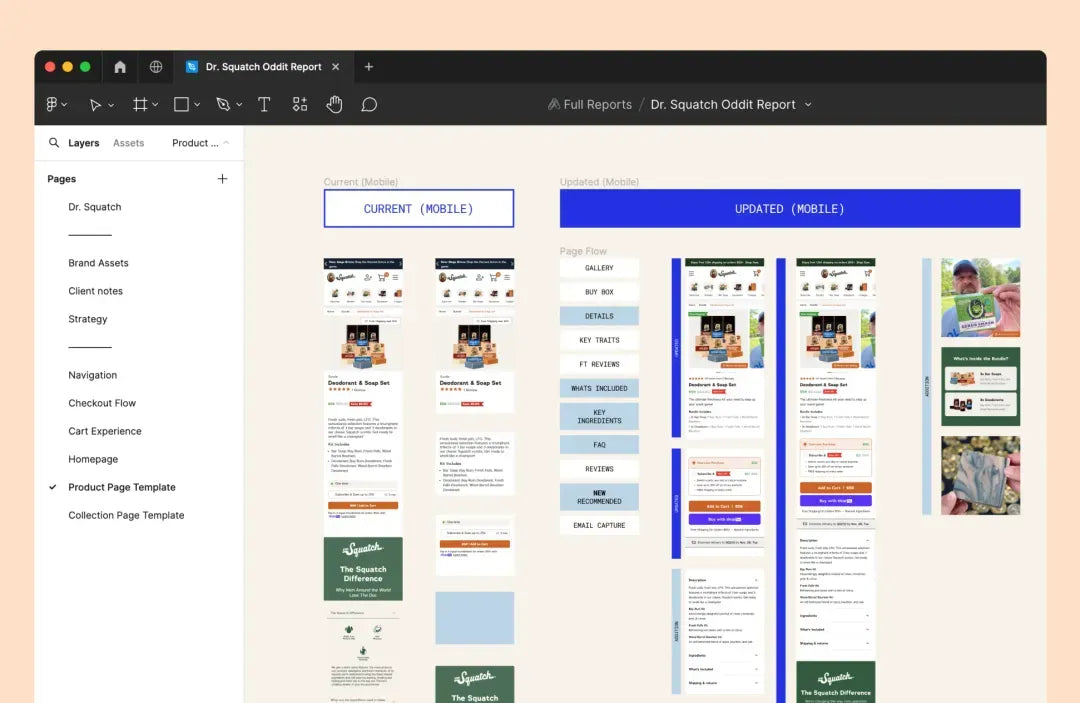

How Our Healthcare Conversion Rate Optimization Process Works

Share your site

We audit through your patient's eyes

Implement and start getting more appointments

Where Healthcare Practices Lose Patients Online
And How to Fix It
Patients move through a predictable journey: searching for a solution, evaluating providers, checking insurance compatibility, and booking. Drop-offs happen when any step feels confusing, slow, or untrustworthy. These are the four most common failure points we find on healthcare practice websites — and what an Oddit report does to address each one.
Service pages that don't answer the right questions "Do you treat my condition?" "Do you accept my insurance?" "What happens at my first visit?" Service pages that don't address these questions directly lose 40–60% of potential patients before they ever reach a scheduling form. We restructure service and specialty pages to answer the questions patients are actually asking, in the order they're asking them.
Scheduling friction at the highest-intent moment Heavy EHR scripts that slow load times, forms requiring medical history before confirming availability, mandatory account creation before booking — all of these create friction exactly when a patient is ready to commit. We redesign scheduling flows to remove every unnecessary step and reduce form fields to only what's needed to confirm an appointment.
Trust signals that aren't visible when they matter Clinician credentials, board certifications, hospital affiliations, patient reviews, and insurance acceptance information need to appear in the first screen of the pages where patients make their decision — not buried in a separate "About" or "Insurance" page. We audit trust signal placement and reposition them at the conversion-critical moments in the patient journey.
Copy that creates cognitive load instead of removing it "Submit inquiry" vs. "Request appointment." "Initial consultation" vs. "First visit." "We'll be in touch" vs. "We'll call within 2 hours." Plain language, specific expectations, and benefit-led messaging reduce the mental effort required for a patient to take the next step. We rewrite the copy on your highest-impact pages with this principle applied throughout.
Choose Your Healthcare Conversion Report
Both Oddit reports include a full conversion audit of your practice website, dev-ready Figma redesigns, copy improvements, and the strategic reasoning behind every change — built to help healthcare practices get more appointment requests and new patient contacts from the traffic they're already generating.
Oddit Essential
$2,250
x10 Redesigned sections
Our team reviews the pages submitted in your order and selects 10 sections to redesign for conversion. Usually this includes your cart and navigation as 2 of the sections as these are critical. A section is essentially a piece of your site you can see in a single view (ex. PDP Buy Box)

x10 Redesigned sections
25+ Page Oddit Report
Every design change is detailed with clear rationale in our clear and thorough report. Our reports not only help get your team aligned on the changes, but also act as an educational tool internally.
25+ Page Oddit Report
Navigation and Slide-in Cart Redesign
Your cart and navigation are the start and end point of the customer experience, making the critical for conversion. We optimize the design, information hierarchy, and ensure the right elements are in the right spot for highest click-through.
Navigation & Slide-in Cart Redesign
Mobile and Desktop Design in Figma
We send you all your new designs in an organized Figma file. Pass them off to a developer, or use as a starting point for future page designs.
Designed for both Mobile and Desktop
Top-Level Copy Review
As part of the design process we also review and edit any necessary top-level copywriting on site. This includes headlines, sub-headings, and button labels – anything that will have an effect on conversion!
Top-Level Copy Review
PLUS
Net New Section Designs
If something critical is missing from your site, our team will design a new section from scratch and add it to the page.
Net New Section Designs
Oddit Pro
$1,750+
Redesign and optimization of selected pages
Our team reviews the pages purchased in your order and redesigns them for conversion from top to bottom – no stone left unturned.
Redesign and optimization of selected pages
Navigation and Slide-in Cart Redesign
Every design change is detailed with clear rationale in our clear and thorough report. Our reports not only help get your team aligned on the changes, but also act as an educational tool internally.
50+ Page Oddit Report
Navigation and Slide-in Cart Redesign
Your cart and navigation are the start and end point of the customer experience, making the critical for conversion. We optimize the design, information hierarchy, and ensure the right elements are in the right spot for highest click-through.
Navigation & Slide-in Cart Redesign
Mobile and Desktop Design in Figma
We send you all your new designs in an organized Figma file. Pass them off to a developer, or use as a starting point for future page designs.
Designed for both Mobile and Desktop
PLUS
Page Flow Optimization
In addition to redesigning your pages, our team also optimizes the page flow of your purchased pages. We ensure the flow of information is presenting the most critical content first, and telling the customer a clear story to optimize conversion.
Page Flow Optimization
Net New Section Designs
If something critical is missing from your site, our team will design a new section from scratch and add it to the page.
Net New Section Designs


Not sure where to start? Try Oddit free — pick any page and get a redesigned section at no cost, no commitment.
Which Oddit is Right for Me?
Oddit Essential
Perfect for those seeking quality design & UX improvements on a more focused level (10 sections across 1-2 URLs). Great for budget conscious brands who would see significant lift by helping a single offering stand out.
- For businesses just starting to A/B test
- For single-SKU brands and products
- For smaller websites (5-10 pages)
Oddit Pro
Built for those looking to optimize multiple on-site journeys. The Oddit Pro ensures every detail is optimized to help you deliver a cohesive user experience and lower those acquisition costs. The Oddit Pro is perfect for sites that house a lot of information, products, or pages.
- For businesses who A/B test on the regular
- For websites with multiple products & journeys
- For medium-large websites (10-100 pages)
Included in Every Oddit
Wanna see a sample? Try before you buy!
Get a FREE Section Design
Oddit Report

Dev-Ready Designs

Raw Figma File

The Conversion Mistakes Costing Healthcare Practices Patients Every Day
After reviewing thousands of business websites across industries — including healthcare practices, specialty clinics, and multi-location groups — we see the same friction points consistently. Each one is sending prospective patients to a competitor, and most practices have several stacked on top of each other.
PROBLEM #1
Slow page load from EHR and scheduling scripts
Heavy scripts from EHR integrations and third-party scheduling widgets often add 2–4 seconds to page load time. Sites that load in under 2 seconds convert 30–50% better than those taking 4+ seconds. Deferred loading and lighter integration approaches can recover most of that speed without sacrificing scheduling functionality.
PROBLEM #2
Vague CTAs that don't tell patients what happens next
"Learn More," "Contact Us," and "Get In Touch" don't tell a patient what to expect when they click. "Request an Appointment," "Book Your First Visit," and "Check Insurance Compatibility" set clear expectations and produce measurably higher completion rates — because patients know exactly what the next step involves.
PROBLEM #3
Insurance information that's hard to find
Insurance compatibility is one of the first questions any prospective patient asks. If that information requires navigation to a separate page, a phone call, or a PDF download, you're losing patients who would otherwise book. Insurance acceptance details belong on service pages and in the hero section of your scheduling page.
PROBLEM #4
Scheduling forms that ask for too much too soon
Forms requesting detailed medical history, reason for visit narratives, or specialist referral documentation before confirming availability create friction at the highest-intent moment in the patient journey. Reduce initial contact to name, phone, preferred appointment time, and service type. Collect everything else at or after confirmation.
PROBLEM #5
No social proof near scheduling
Patient reviews, star ratings, and provider credentials placed near your scheduling button consistently outperform the same content placed in a footer or dedicated testimonials page. A five-star review with a specific outcome statement next to your "Request Appointment" button removes the last hesitation a patient has before submitting.
PROBLEM #6
Mobile experience that wasn't designed for patients in the moment
Healthcare searches often happen during stressful moments — after a diagnosis, during a health concern, while researching a specialist. A mobile experience that requires zooming, pinching, or navigating complex menus loses patients who need clarity and speed at exactly that moment. Mobile-first design with accessible fonts, tap targets, and fast load times is non-negotiable.
What We’re Especially Good At

“Above the Fold” Hyperfocus

Easy-to-understand Rationales

A/B Testing Ideas

Before & After Mockups

Brand Consistency Clean Up

Healthcare Conversion Optimization
See Exactly What's Stopping Patients From Scheduling With Your Practice — Free
No commitment. Just a clear look at your biggest conversion barrier and a design that removes it.
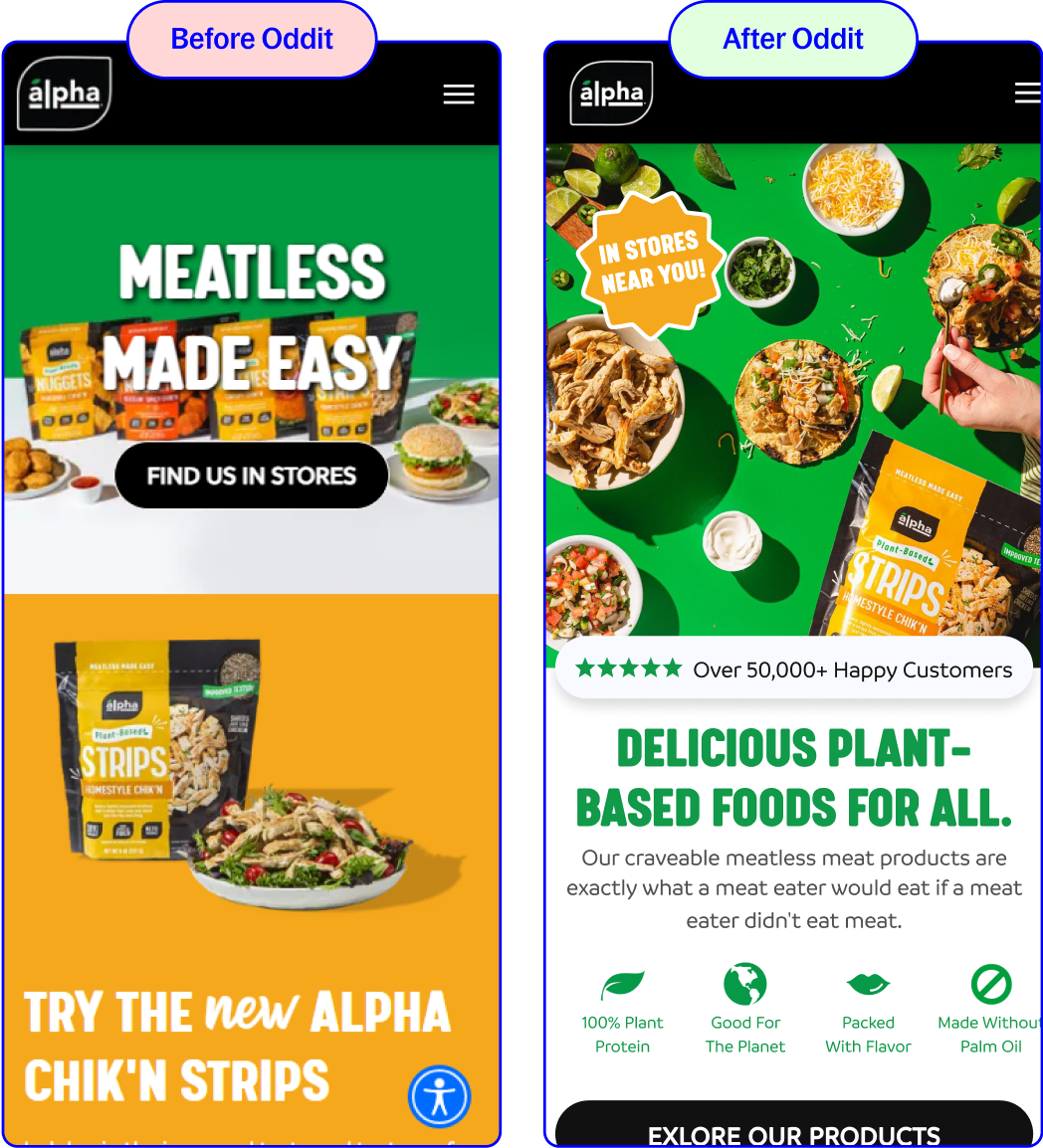
What’s a Section?
Think of a section like a slice of a page, containing specific content & functionality–like a product card or reviews section.

Collapsible content
What does conversion rate optimization mean for a healthcare practice?
For a healthcare practice, conversion rate optimization means identifying and removing the friction that stops website visitors from booking appointments or requesting consultations. That friction typically lives in scheduling form design, service page messaging, insurance information visibility, trust signal placement, and mobile page performance. Fix those barriers and more of your existing traffic becomes actual patients — without increasing ad spend.
How is healthcare conversion optimization different from other industries?
Healthcare has several unique considerations. Patients are often making decisions during stressful or uncertain moments. Trust signals — credentials, board certifications, patient reviews, insurance acceptance — carry more weight than in most service categories. HIPAA compliance affects how you collect, store, and track visitor data. And scheduling integrations with EHR systems often introduce performance problems that directly hurt conversion rates. Oddit's healthcare audits address all of these factors specifically.
How much does conversion rate optimization for a healthcare practice cost?
Traditional marketing agencies offering healthcare CRO services typically charge $3,000–$10,000+ per month on retainer. Oddit reports start at $2,250 as a one-time fixed fee. You receive a complete audit, dev-ready Figma redesigns, and a full strategy PDF with no ongoing commitment required.
What pages does Oddit audit for healthcare practices?
We focus on the pages driving the most appointment requests — typically your homepage, primary service or specialty pages, scheduling or contact page, and any landing pages from paid campaigns. We evaluate CTA clarity, form design, trust signal placement, insurance information visibility, mobile experience, and page performance across all of them.
Does Oddit understand HIPAA compliance for healthcare marketing?
Our work focuses on design, UX, messaging, and trust signal optimization — not on patient data handling systems. We understand that healthcare marketing operates in a regulated environment: forms should collect only what's necessary for appointment scheduling, tracking implementations require careful consideration of PHI exposure, and certain marketing practices require business associate agreements with vendors. We flag these considerations in our recommendations, and your compliance team reviews all implementations before going live.
3. If you're ready dive into the deep end with the Oddit team, you canbook a strategy callwith our Oddit Service team to discuss more custom or in-depth engagements.
What about EHR scheduling integrations that slow page load times?
This is one of the most common performance problems we identify on healthcare sites. Heavy EHR scripts frequently add 2–4 seconds to load time, which directly suppresses conversion rates. Our recommendations include deferred and async loading approaches, lightweight scheduling widget alternatives, and server-side integration options where applicable. We document the specific performance issues and provide implementation guidance — your development team handles the technical build.
How quickly will I see more appointment requests after implementing changes?
Most clients implement Oddit changes within 2–4 weeks of receiving their report. Healthcare practices running paid search see measurable changes in scheduling completion rates relatively quickly after implementation since paid traffic provides faster feedback. Organic traffic improvements build more gradually but compound over time.
Can I start without committing to a full report?
Yes. Oddit's free trial delivers a before-and-after redesign of one page on your site — with the full conversion reasoning behind every change, at no cost and no credit card required. It's the clearest way to evaluate the quality of the work before purchasing a full report.

Ready to Turn More Healthcare Visitors Into Booked Appointments?
Keep building fast, without letting the
conversion-killing mistakes pile up.


